Why Response Times Vary for Desentupidoras in Barueri SP
It is 11 pm in Barueri, and the kitchen drain has backed up into a pool of grey water. You call a local emergency number and hear silence, then a generic voicemail. The silence is not proof that nobody is working. It usually means the call entered a queue, a dispatcher is handling another emergency, or the company serving your address is based in a neighboring city such as Carapicuíba. Understanding that gap between your call and a technician at the door is the first step to choosing a service that actually responds when it matters.
This is a practical look at what determines how quickly a plumbing emergency gets answered in Barueri, and how to describe your situation so the right team arrives prepared. If you are searching for a desentupidora Carapicuíba SP, the same factors apply: distance, staffing, equipment and how clearly you explain the problem.
What happens on the other end of an emergency call
When you dial a 24-hour desentupidora, your call rarely goes straight to a technician. It usually reaches a call center, a WhatsApp line, or a single dispatcher juggling a phone and a radio. That person must log your address, identify the type of blockage, and decide which crew to send. Each of those steps takes time, and each one can stall if information is missing.
Many companies operating in Barueri also cover neighboring municipalities. A crew finishing a job in Carapicuíba may be the closest available team for your street, which is why a desentupidora Carapicuíba can sometimes answer a Barueri call faster than a firm based farther inside São Paulo. The dispatcher’s map of where trucks currently are matters more than the company’s official headquarters.
Response time is a logistics problem, not a promise. Any company that guarantees a fixed number of minutes without asking about your location and the type of blockage is guessing.
Factors that decide how fast a team reaches you
No two emergencies are identical, and the variables below explain most of the difference between a quick answer and a long wait. None of them is about luck. They are operational realities you can partly influence.
Time of day and day of the week
Late nights, weekends and holidays concentrate demand. A single dispatcher may be covering the whole western region of Greater São Paulo, so a call at 2 am on a Sunday competes with every other burst pipe and backed-up sewer in the area. Weekday business hours usually have more staff on duty, but they also bring more simultaneous calls from commercial buildings.
Distance and traffic between the base and your address
Barueri sits next to Carapicuíba, Osasco and Jandira, and the Alphaville and Tamboré areas have their own access patterns. A team already in the region can arrive faster than one crossing the city. Traffic on the Castello Branco or local avenues at rush hour can add more delay than the actual repair.
Type of blockage and equipment needed
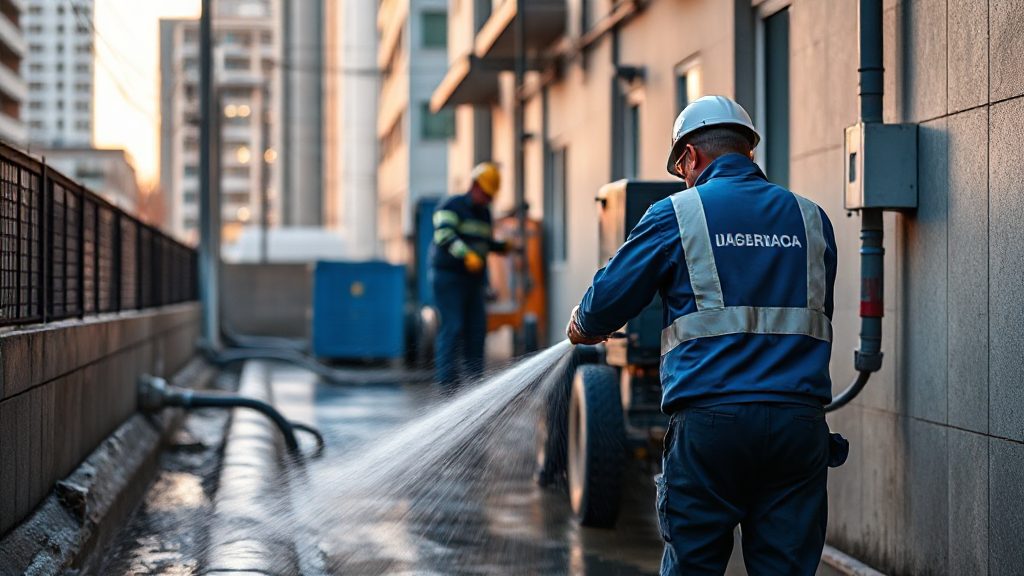
A simple sink clog may need only a manual snake. A main sewer line or a grease-filled restaurant drain may require a hydrojetting truck with a water tank and high-pressure hose. If the first crew arrives without the right machine, they either return later or call a second vehicle. Describing the problem accurately prevents that second trip.
Staffing and how calls are queued
Companies with several crews and a dedicated dispatcher can rotate jobs continuously. Smaller operations may have one team on call, so a job in progress blocks the next call. Ask whether the number you are calling is answered by a dispatcher or forwarded to a technician’s mobile phone; the difference shows up in how quickly someone picks up.
Access to the property
A condominium in Barueri may require gate authorization, a service elevator reservation, or a syndic’s approval before any truck enters. Buildings with restricted garages or narrow service roads slow down arrival even when the crew is nearby. Having the gate code and a contact person ready removes one delay.
How to describe an emergency so the right crew is sent
The quality of your first sentence determines what the dispatcher writes down and which equipment is loaded. Vague descriptions like “the drain is clogged” force follow-up questions, and each question is a minute lost.
- State the exact address and access notes first, including building name, gate code and whether a truck can park at the entrance.
- Say what is backing up: kitchen sink, bathroom floor drain, toilet, laundry area, or an outdoor inspection box.
- Mention whether the water is clear, grey, or contains sewage, and whether it is rising in more than one fixture.
- Note any smell of gas, electrical panels near the water, or flooding close to sockets, since those change the safety priority.
- Confirm whether the property is residential, commercial or a condominium, because commercial kitchens and large buildings often need hydrojetting rather than a hand tool.
A dispatcher who hears “sewage rising in two floor drains in the basement garage, gate code 4412” can send the correct truck immediately. The same call described as “it’s flooding” triggers a round of questions.
Comparing local providers without relying on advertised minutes
Advertised response times are marketing, not contracts. A more reliable comparison looks at how a company operates when demand is high. Use the table below as a checklist when you call around.
| What to check | Why it matters |
|---|---|
| Is the phone answered by a dispatcher or a machine? | A live dispatcher can give you a realistic estimate and queue your job. |
| Does the company serve Barueri and Carapicuíba from a nearby base? | Shorter travel distance reduces delay, especially at night. |
| Do they operate hydrojetting trucks and vacuum trucks? | Heavy blockages and septic tank cleaning need specialized equipment. |
| Can they explain the process before arriving? | A clear explanation suggests trained staff rather than improvisation. |
For residents comparing options, a desentupidora em Carapicuíba SP that openly describes its equipment and coverage area is easier to evaluate than one that only repeats a phone number. Ask what happens if the first crew cannot solve the problem on site.
Never accept a quote without knowing whether it includes the equipment call and disposal. A low visit fee can hide a separate charge for the hydrojetting truck or for removing waste.
Preventing the next late-night call
Most emergency calls in Barueri follow predictable patterns: grease buildup in kitchen lines, roots in older clay pipes, and overloaded septic systems in properties outside the main sewer network. A preventive inspection of drains and grease traps, especially in restaurants and condominiums, reduces the chance of a midnight backup.
Keep a written record of your building’s drain layout and the location of inspection boxes. When a blockage happens, that record saves the technician time and helps the dispatcher decide which equipment to send. It also makes future maintenance cheaper, because the crew does not have to search for access points.
Finally, save the number of a service that covers your area and answers calls around the clock, and note the best time to reach them for non-urgent scheduling. Knowing who to call and what to say is the most practical way to shorten the silence after you hang up.
Frequently asked questions
How long does a desentupidora usually take to arrive in Barueri?
There is no fixed time. Arrival depends on how many crews are working, where they are when you call, traffic, and the type of blockage. A dispatcher can give a realistic estimate after taking your address and describing the problem.
Why does a Carapicuíba-based company sometimes answer faster than a São Paulo one?
Barueri borders Carapicuíba, so a crew already in that neighboring city may be closer to your street than one traveling from central São Paulo. Coverage area and current truck positions matter more than the company’s official address.
What information should I have ready before calling?
Have your full address, gate or building access details, the fixtures affected, whether the water contains sewage, and any safety concerns such as flooding near electrical outlets. This lets the dispatcher send the right equipment on the first trip.
Does hydrojetting cost more than a standard drain snake?
Hydrojetting uses a truck with a high-pressure hose and water tank, so it generally costs more than a manual snake. It is also the appropriate method for grease, roots and large sewer lines that a hand tool cannot clear.
Leave a Reply